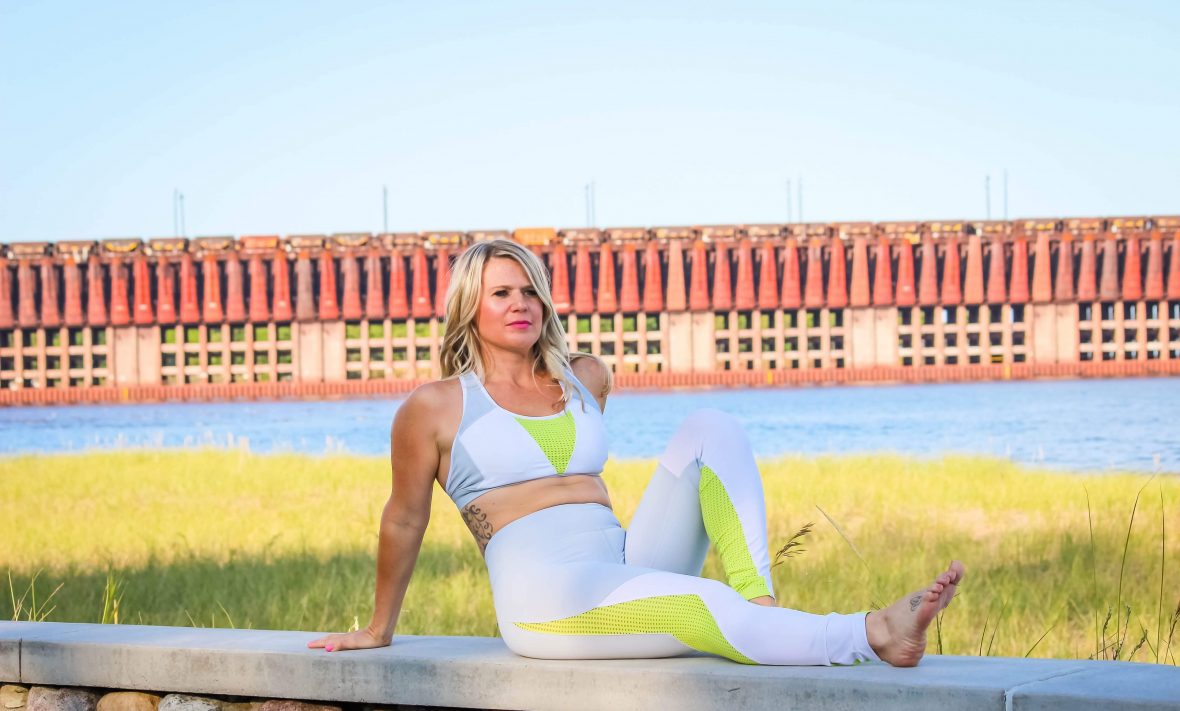
Recovery, nervous system regulation, preventative health, and the beautiful freedom of learning to just BE.
There’s something about Fridays that has me reflecting lately.
For so many people, Friday represents freedom. The end of the workweek. The anticipation of something exciting. A night out. A drink. Something to look forward to.
And I get it. I really do.
There was a time in my life when Fridays meant those things to me, too.
But I want to talk about something that I don’t think gets discussed enough.
The beauty of finally being able to just BE.
When I say I’m an alcoholic, I think sometimes people immediately picture the worst version of alcoholism. Someone whose entire life was consumed by drinking. Someone who was always out of control. Someone whose every memory involving alcohol must be filled with regret.
But that’s not my story.
I started drinking young. And yes, in my early twenties, I had fun. I have memories that make me laugh. I have memories of being young, making mistakes, enjoying life, and doing some pretty dumb things along the way.
And you know what?
I don’t regret my entire life just because I’m an alcoholic.
I don’t need to hate every version of myself to appreciate the woman I’ve become.
Alcoholism, at least in my experience, was progressive.
It didn’t happen overnight.
I didn’t take my first drink and immediately experience all the consequences that would eventually bring me to my knees.
It took time.
There were years when drinking seemed relatively normal. There were times when it was social. There were Fridays when it was simply something to do.
As I became a mother, life changed. I didn’t drink during my pregnancies, and I think that’s important to clarify because alcoholism doesn’t look the same for everyone.
But over time, my relationship with alcohol changed.
What once felt like a choice became something I struggled to control.
Eventually, I had to become honest with myself.
Once I started drinking, I couldn’t reliably control when I would stop.
That’s what acknowledging my alcoholism meant for me.
And here’s where Fridays become interesting.
When Friday No Longer Meant Drinking
In early recovery, Fridays felt different.
There was the realization that the weekend was coming and I wasn’t going to drink.
There were moments of excitement, discomfort, and moments when I had to learn how to experience life without the anticipation of alcohol.
And then there was the pink cloud.
Oh, the pink cloud!
Those beautiful moments in recovery when everything feels exciting, when you’re overwhelmed with gratitude, when you suddenly realize how incredible it is to be alive and sober.
I still experience those moments.
But something else has happened along the way.
Something quieter.
Something I honestly believe is even more beautiful.
I’ve started to fall in love with peace.
Not the kind of happiness that comes from an adrenaline rush.
Not the kind that requires constant excitement, validation, or something new to look forward to.
Just peace.
A calmer nervous system. A quieter mind. The ability to sit with myself without feeling like I need to escape something.
And I think this is bigger than alcoholism.
Have We Forgotten How to Just Be?
We live in a world where we’re constantly being stimulated.
Our phones. Social media. Notifications. The next purchase. The next vacation. The next relationship. The next exciting thing.
We’re constantly looking for something to make us feel good.
And dopamine itself isn’t bad. It’s essential to how our brains function.
But I think we’ve become so accustomed to chasing the next reward that we sometimes forget how to appreciate what’s already in front of us.
I spent so much of my life feeling like my nervous system was on high alert.
Fight or flight.
Anticipating. Reacting. Worrying. Trying to control outcomes. Trying to find relief.
And recovery has taught me that I don’t have to live there.
That doesn’t mean I never experience anxiety. It doesn’t mean I never get overwhelmed or have difficult days.
I absolutely do.
But today, I have tools.
I have faith. I have Recovery rooms, A program, I have therapy. I have movement. I have people who understand me.
And I’ve learned that I don’t have to react to every feeling that passes through my body.
A feeling doesn’t always require an action.
Sometimes I can simply acknowledge it, allow it to pass, and continue living.
And Speaking of Regulating Our Nervous Systems… Listen, Karen.
Can we talk about the way we speak to one another?
We’re entering another season of respiratory illnesses, and suddenly social media is filled with people telling parents what they should and shouldn’t do.
Get your children vaccinated. Don’t do this. Don’t do that.
And listen, I am all for conversations about public health. I’m all for science, prevention, and protecting vulnerable people.
But I am exhausted by the idea that disagreeing with someone automatically makes you irresponsible, selfish, or unkind.
Especially when the very same people preaching kindness and tolerance are the first to attack someone who sees things differently.
It’s almost laughable.
I’m a mother of six. I’ve had premature babies. I’ve had a child with a tracheostomy. I’ve watched respiratory illness become something far more serious than an inconvenient week at home.
My son Tanner had RSV.
And here’s something that has stayed with me.
We were offered Synagis, an RSV preventative antibody treatment, but not until late November.
RSV can begin circulating earlier in the fall, and Tanner had already contracted it before receiving that protection.
Then we were offered the treatment afterward.
Now, I understand that Synagis isn’t a vaccine. I understand that it’s designed to help prevent severe RSV illness, not treat an active infection, and that a child can become infected more than once.
But as a mother, I still have questions.
Why wasn’t prevention discussed earlier for a medically fragile child?
Was the timing based on local RSV activity, insurance authorization, or something else? I was simply told they would let me know when it was available. 
Those are reasonable questions to ask.
And asking them doesn’t make me anti-science.
It makes me a mother who wants to understand the decisions being made about her child’s health.
I also believe we should be able to discuss pharmaceutical pricing, medical recommendations, and informed consent without immediately turning those conversations into personal attacks.
We can value modern medicine and still ask questions about the healthcare system.
Those two things are not mutually exclusive.
Questioning the System Doesn’t Mean Rejecting Medicine
Something else I’ve been thinking about lately is the growing conversation around healthcare professionals who advocate for a more preventative, holistic approach to health.
And I find that fascinating.
Not because I believe every natural remedy works. Not because I think modern medicine is the enemy. And certainly not because I believe we should throw evidence out the window.
But because I think we’ve reached a point where asking questions about healthcare has somehow become controversial.
Why?
Why can’t we talk about pharmaceutical companies, financial incentives, medication costs, and the importance of prevention without immediately being labeled anti-science?
Why can’t we recognize that modern medicine has saved countless lives while also acknowledging that our healthcare system has room for improvement?
As a mother of six, including children who have required extensive medical care, I have tremendous appreciation for modern medicine.
I’ve witnessed what it can do.
But I’ve also learned the importance of asking questions, understanding recommendations, and advocating for my children.
Being grateful for medical care doesn’t mean surrendering my ability to think critically.
And here’s something else.
If we’re going to question the pharmaceutical industry, we should be willing to question the supplement industry, too.
Natural doesn’t automatically mean safe. Prescription doesn’t automatically mean unnecessary. And just because someone has a medical degree doesn’t mean every recommendation should go unquestioned.
Evidence matters. Transparency matters. Informed consent matters.
I want physicians who consider the whole person. I want conversations about nutrition, movement, sleep, stress, and prevention to be just as meaningful as conversations about medications and treatments.
And when medication, vaccines, or medical intervention are appropriate, I want those conversations grounded in evidence, individual circumstances, and a genuine understanding of the benefits and risks.
We should be able to question the pharmaceutical industry without automatically trusting the supplement industry.
We should be able to embrace natural wellness without dismissing lifesaving medicine.
And we should be able to ask questions without turning every healthcare conversation into an argument.
Because ultimately, this isn’t about choosing sides.
It’s about making informed decisions.
It’s about taking responsibility for the things we can control while recognizing the things we cannot.
And it’s about remembering that the goal of healthcare should always be the health and well-being of the people receiving it.
Especially our children.
Maybe getting back to the basics doesn’t mean rejecting everything we’ve learned.
Maybe it means being willing to question, learn, listen, and recognize that two things can be true at once.
Can We Please Talk About the Fundamentals of Health?
And while we’re talking about preventative health, can we talk about the things we actually have some control over?
Getting adequate sleep.
Nourishing our bodies.
Moving regularly.
Managing chronic stress.
Learning how to regulate our nervous systems.
Taking care of our emotional well-being.
Understanding what our bodies need instead of assuming another supplement is always the answer.
Yes, vitamins and supplements can be useful when there’s a specific need. But they aren’t substitutes for the basics.
And neither is pretending that stress doesn’t affect our health.
Cortisol isn’t the enemy. It’s a hormone our bodies need.
But prolonged stress without adequate recovery can affect our sleep, immune function, emotional well-being, and overall health.
And perhaps one of my favorite preventative practices?
Learning to PAUSE before we REACT.
Because constantly living in fight-or-flight mode isn’t something we should normalize.
And listen, Karen. 😂
You can preach kindness, health, and personal responsibility all day long, but if you’re attacking someone in the Facebook comments because they don’t agree with you, maybe it’s worth examining how you’re responding, too.
You don’t have to attend every argument you’re invited to.
You don’t have to react to every opinion.
And you certainly don’t have to live in a constant state of outrage.
Preventative care matters. Vaccines and medical care have their place. And so do sleep, nutrition, exercise, emotional regulation, and managing stress.
These things work together, not against one another.
Remember When Our Moms Told Us to Put Our Coats On?
And while we’re questioning things we’ve always believed, remember growing up hearing:
“Put your coat on or you’re going to get sick!”
Or:
“You’re going to catch a cold if you go outside with wet hair!”
Well, here’s the thing.
Respiratory infections are caused by viruses, not simply by being cold.
Now, that doesn’t mean your mom was wrong to tell you to bundle up. Proper clothing protects us from cold exposure, hypothermia, and frostbite.
And cold weather can influence respiratory health and how viruses spread.
But forgetting your winter boots doesn’t magically create a virus in your body.
And I think there’s a lesson in that.
We should be willing to learn, willing to question, and willing to change our minds when presented with better information.
That applies to the things our parents taught us.
It applies to healthcare.
It applies to politics.
And it certainly applies to the things we read on Facebook.
The Beautiful Art of Not Reacting
Here’s where all of this comes back to recovery.
I spent years learning how not to reach for alcohol in response to a feeling.
And today, I’m learning that I don’t have to reach for a reaction every time something bothers me.
Not every opinion deserves my energy.
Not every Facebook comment deserves my response.
Not every disagreement needs to become a battle.
And not every uncomfortable emotion means something is wrong.
Sometimes the healthiest thing I can do is pause.
Take a breath.
Pray.
Go for a run.
Spend time with my children.
Or simply allow a feeling to exist without trying to fix it.
I’m a mother of six. My life is not quiet in the traditional sense.
There are schedules, responsibilities, noise, messes, and plenty of moments that test my patience.
But there’s a difference between having a busy life and living in a constant state of internal chaos.
My life doesn’t have to be perfectly calm for me to experience inner peace.
And that is something I never fully understood until recovery.
So, What Does Friday Mean to Me Now?
Friday doesn’t have to mean escaping my life anymore.
It doesn’t have to mean finding something to take the edge off.
It doesn’t have to mean chasing excitement because I can’t tolerate the ordinary.
It can simply mean another beautiful day that I get to experience fully present.
I can wake up, have my coffee, spend time with my children, work, go for a run, or enjoy the ordinary moments of my life.
And actually be there for them.
I don’t need to be ashamed of every chapter that came before this one.
I don’t need to pretend that alcohol never brought me moments of enjoyment.
But I also don’t need to romanticize something that eventually took so much from me.
Both things can be true.
There were good memories.
And there came a time when alcohol was no longer good for me.
Today, I get to live differently.
So if you’re early in recovery and Fridays feel strange, uncomfortable, or even a little lonely, I want you to know something.
That feeling doesn’t have to last forever.
You may discover that the peace you initially mistake for boredom is actually something you’ve been searching for your entire life.
And if you’re not in recovery, maybe this is something worth reflecting on, too.
When was the last time you allowed yourself to simply exist without needing the next exciting thing?
Without needing to fill every quiet moment?
Without needing to escape your own thoughts?
Because maybe the greatest freedom isn’t being able to do whatever we want on a Friday night.
Maybe the greatest freedom is no longer needing something outside of ourselves to feel okay on the inside.
And maybe, just maybe, the world would be a little healthier if we all learned to pause before reacting.
One day at a time.
Let It Unfold. ❤️


